
Advantages and disadvantages of mast lifts
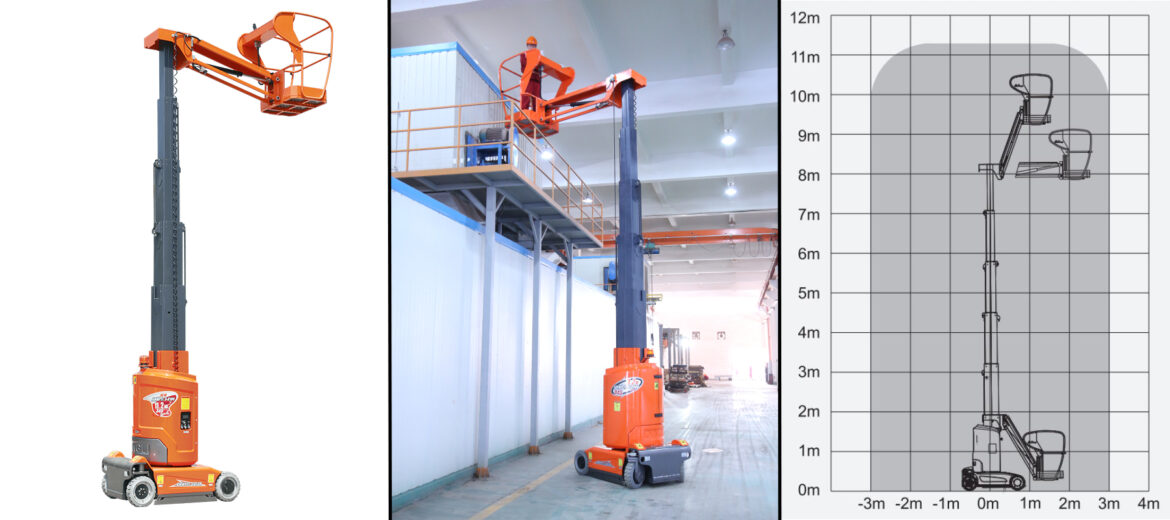
The use of mast lifts has changed how companies approach working on tasks that need to be completed at height. These easy-to-use machines have been designed for precision and effectiveness when being used within specific environments. In this blog, you can explore how, like any piece of equipment, mast lifts have their own set of advantages and disadvantages while discovering the Dingli Star 11 that is now available for hire at Elavation.
What is a Vertical Mast Lift?
Imagine a tool that’s compact enough to squeeze into the narrowest spots yet powerful enough to lift you to dizzying heights. That’s a vertical mast lift! They’re designed for jobs where you need to go up, not out. Whether you’re changing a lightbulb in a lofty hallway, fixing something high in a warehouse, or performing delicate maintenance, vertical mast lifts are the go-to solution.
Unlike bulkier machines, they’re lightweight and easy to move around, perfect for areas where space is a luxury. They’re a favorite for indoor tasks, thanks to their compact design and precise movement.
How Do Vertical Mast Lifts Work?
Vertical mast lifts use a sleek telescoping mast system—imagine a giant, sturdy metal straw that extends and retracts. This mast is the heart of the machine, allowing you to glide smoothly upward. The controls are designed for simplicity, making it easy for operators to maneuver with precision.
Most models run on battery power, so they’re whisper-quiet and emission-free, which is great for indoor spaces. Their wheels are designed for tight corners, so turning around in a cramped area feels as easy as steering a shopping cart (a really fancy one!).
At their core, vertical mast lifts combine clever engineering with user-friendly design. They take the stress out of working at height, offering stability and safety without the bulk. If you’re tackling a job that needs a lift but not a lot of space, a vertical mast lift might just become your new best friend.
The Advantages of Mast Lifts
The use of mast lifts offers a selection of advantages, which allows them to become a great choice for hiring within many industries. Below, you can explore some of the key advantages of mast lifts:
Precision at height
One of the main features of mast lifts is the ability to provide precise control when working at height. When understanding how vertical mast lifts work, understanding of how the design allows workers to reach specific heights with accuracy makes these lifts perfect for tasks such as maintenance and cleaning.Electric powered options
Many mast lifts, such as the Dingli Star 11, are powered electrically, which offers a more suitable alternative to other fuel-powered machines. When working with mast lifts, their powered battery systems allow you to work at height and with movement to allow a smooth operation without emissions, which is perfect for indoor environments such as warehouses. Also, take a look at the article on using cherry pickers for warehouse operations.Cost-effective
Providing an economical solution for companies due to the low energy consumption and less amount for manual labour. Using energy-efficient systems, mast lifts reduce cost usage for companies that are searching to improve performance levels without increasing their preferred costs.
The Disadvantages of Mast Lifts
While using mast lifts offers a selection of advantages, they also come with limitations that should be considered to make the best decision when hiring for your requirements. Below, you can explore some of the disadvantages to be considered:
Limited weight
The smaller design of mast lifts have a lower amount of load capacities in comparison to other types of access equipment. This can result in restrictions on the amount of materials and tools that can be carried at one time, making them less suitable for jobs that require heavier lifting.Outdoor limitations
While some mast lifts can be operated outdoors, they have been designed mainly for indoor use. Factors such as uneven ground surfaces and windy conditions can affect the overall working performance, making them less reliable outdoors.Maintenance needs
Each style of access lift requires maintenance. For example, mast lifts have regular maintenance checks to ensure the correct operation is being completed. However, our electric models may require specific attention towards their battery systems, which can increase maintenance demands over periods of time.
Dingli Star 11 at Elavation
At Elavation, we offer the Dingli Star 11, available for hire as one of the favourable mast lifts designed for indoor use. This lift is compact and perfect for working at height, such as in warehouses and narrow areas where reaching higher tiers, such as shelves or fixing lighting issues, is needed.
The Dingli Star 11 is powered by electricity and works quietly, making it eco-friendly and safe for indoor jobs. Weighing 2950kg, it is lightweight and still sturdy to transport and set up in the correct environments.
Mast lifts have changed over the years to work at height with precision and efficiency. While they offer advantages such as cost-effectiveness, it is important to be aware of the disadvantages, such as weight capacity, which is important when working with different tools and materials depending on the job. The Dingli Star 11, now available at Elavation, shows these strengths, making it a reliable and adaptable choice for indoor tasks, whether in warehouses or indoor buildings.
Get in touch with us to arrange your mast lift hire today.


